Make Your Own Protein-Packed Trail Snack
When you’re heading out onto the trail, having a protein-rich snack that’s lightweight, compact and full of flavour can make a big difference.
And making your own trail snacks can be surprisingly easy. With a few simple ingredients, some beef mince and either a dehydrator or your oven, you can make a batch of delicious dried beef to add to your hiking snack kit.
Inspired by the flavours of traditional South African boerewors and biltong, this recipe combines coriander, black pepper, vinegar and warming spices to create a savoury snack that’s made for the trail.
Simple ingredients. Big flavour. Plenty of protein. And easy to pack.
Why Make Your Own Trail Snack?
A good hiking snack needs to tick a few boxes:
- Lightweight – you’re carrying everything on your back.
- Protein-rich – for a satisfying snack between meals.
- Compact – it shouldn’t take up half your backpack.
- Full of flavour – because trail food shouldn’t be boring.
- Easy to make – preferably with ingredients you already have at home.
This homemade dried beef ticks all five.
And because you’re making it yourself, you know exactly what has gone into it.
Homemade Trail Beef Snack
Ingredients
- 1 kg ground beef, approximately 15% fat
- 60 g Worcestershire sauce
- 25 g brown vinegar
- 25 g fine sea salt
- 4 g coriander seeds
- 5 g cracked black pepper
- 1.5 g ground nutmeg
- 1 g ground cloves
- 1.5 g ground allspice
- 1.5 g fine coriander
Makes approximately 25 pieces.
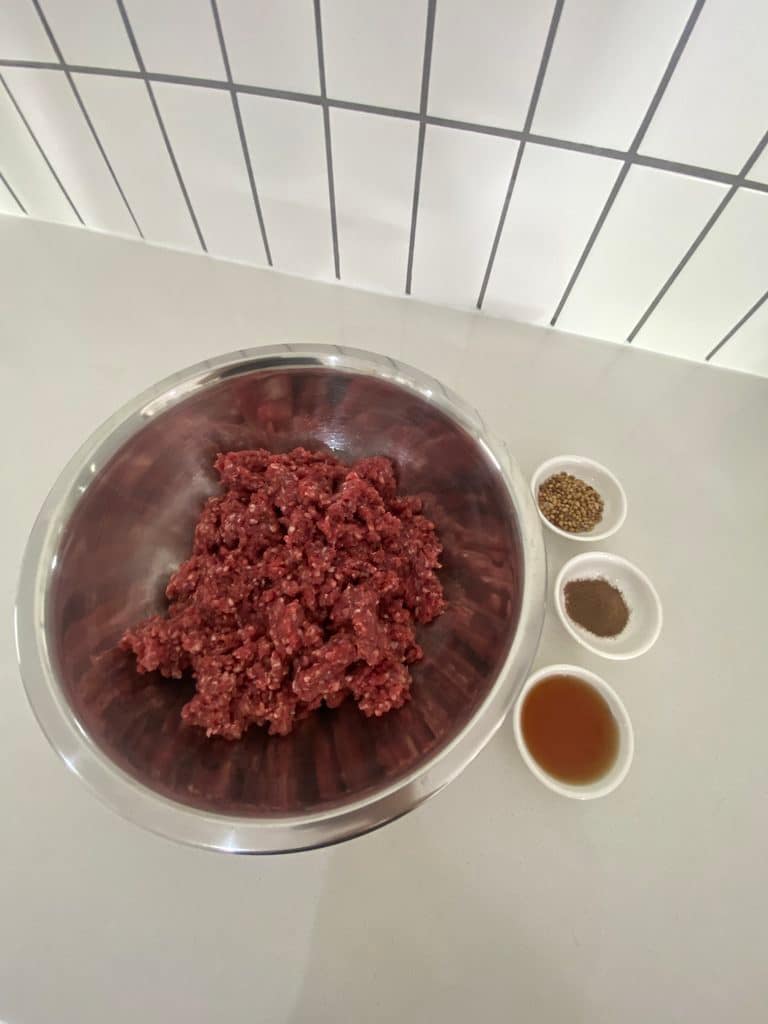
How to Make It
1. Toast the coriander
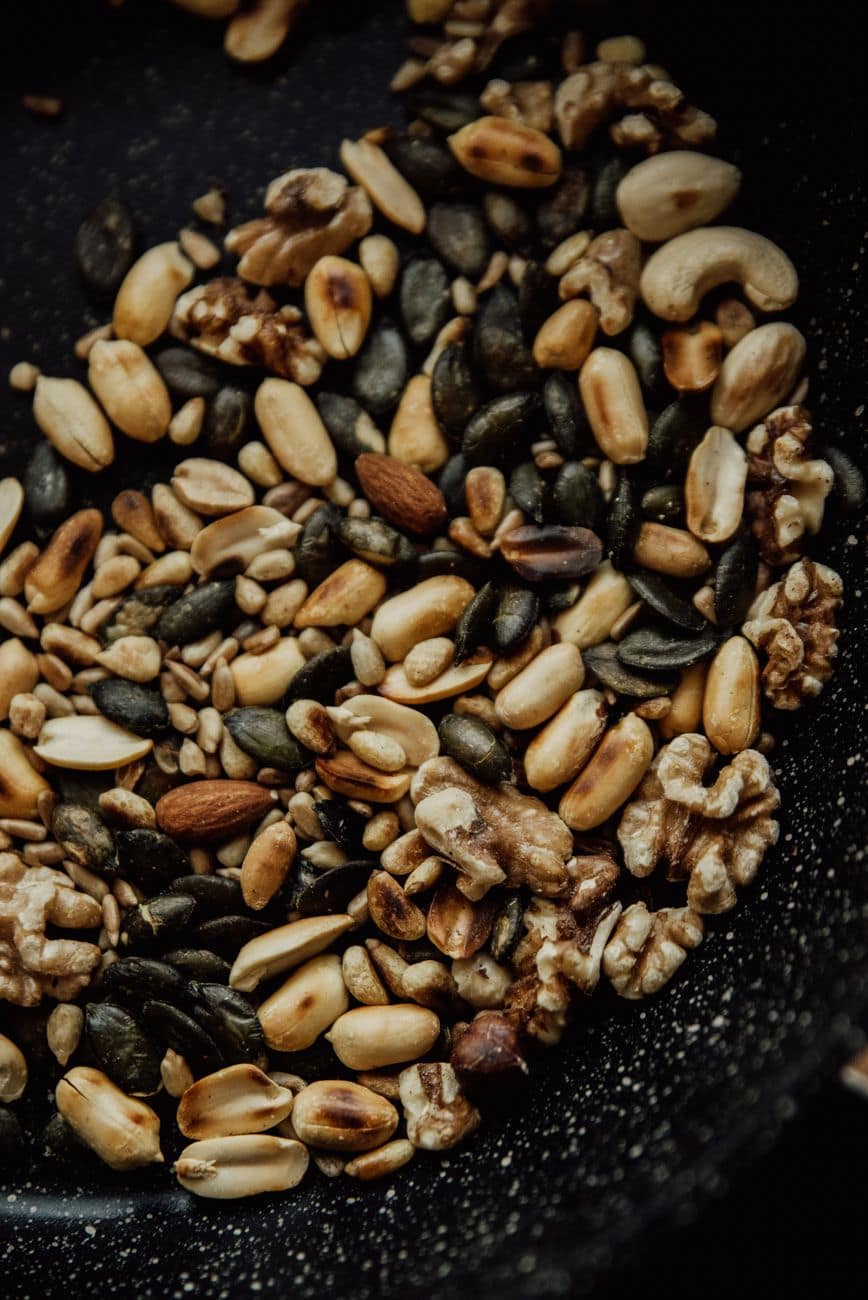
Place the coriander seeds in a dry frying pan over medium heat.
Toast until fragrant, taking care not to burn them.
Allow them to cool, then grind them coarsely. You want little pieces of coriander throughout the beef rather than a fine powder.
2. Mix the beef and spices
Combine the toasted coriander with the cracked black pepper, nutmeg, cloves, allspice and fine coriander.
Add the spice mixture to the ground beef.
Pour in the Worcestershire sauce and brown vinegar and mix thoroughly until everything is evenly distributed throughout the meat.
3. Let the flavours develop
Cover the mixture and place it in the refrigerator overnight.
This gives the salt, vinegar, Worcestershire sauce and spices time to work through the meat and allows all those flavours to develop.
It also makes this recipe wonderfully convenient: mix it one evening and finish it the next day.
Shape Your Trail Beef
The following day, divide the mixture into 40 g balls.
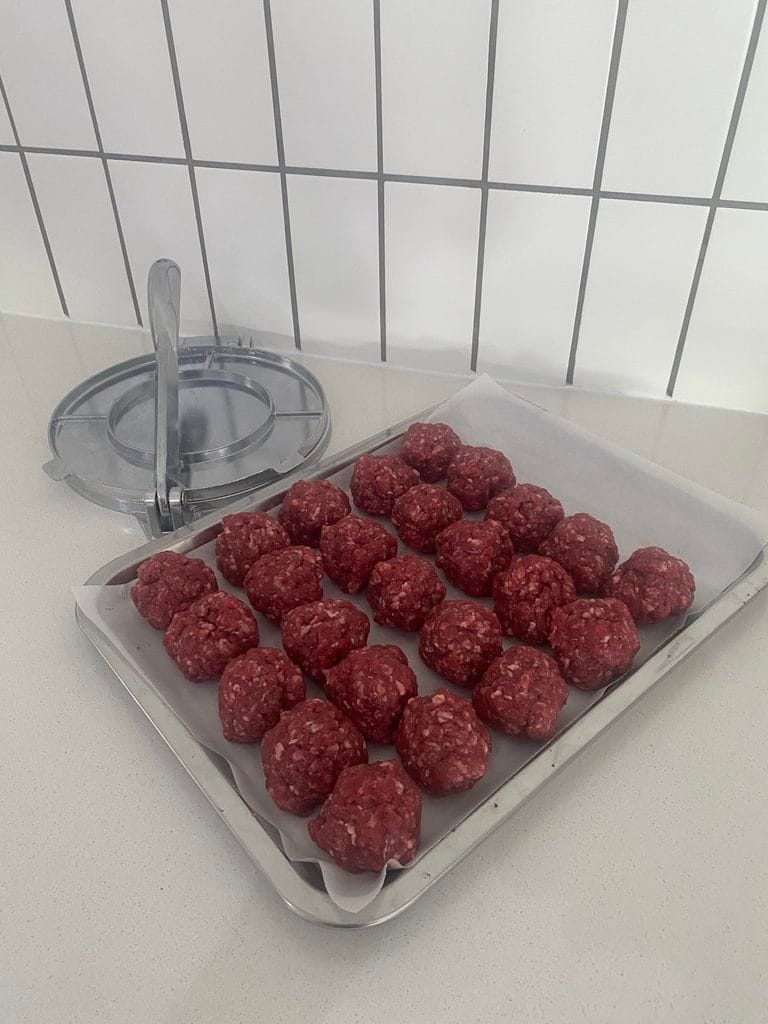
Place each ball between two sheets of parchment paper.
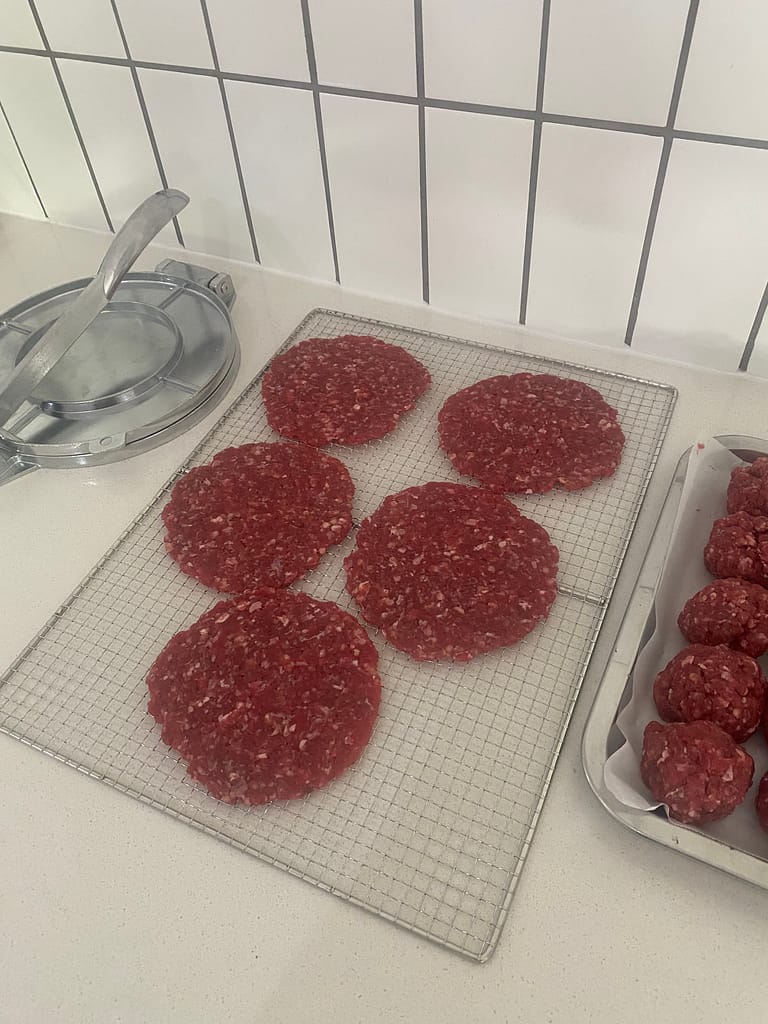
Using a patty press or rolling pin, press the meat into a very thin, even disc.
Don’t worry about making them perfectly round. These are going into your backpack, not onto a restaurant plate!
The important thing is to keep them thin and relatively uniform, so they dry evenly.
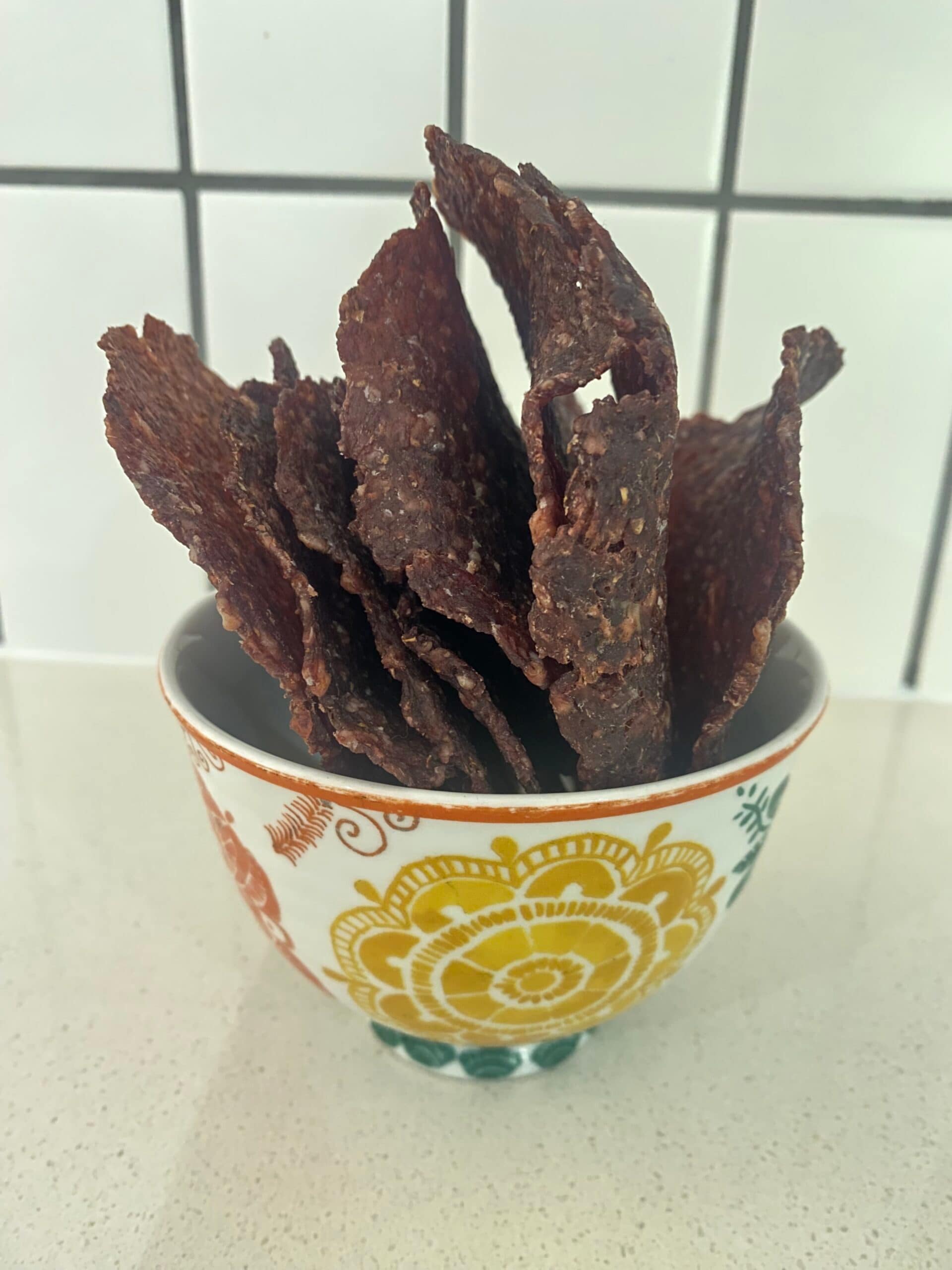
Each 40 g portion should dry down to approximately 14 g, depending on how much moisture is removed.
Drying Your Trail Beef Snack
And here’s the good news:
You don’t need a dehydrator to make these.
There are two easy ways to dry your trail beef at home.
Option 1: Use a dehydrator
Place the flattened beef directly onto your dehydrator racks.
Arrange the pieces in a single layer, leaving a little space between them for good airflow.
Dry according to your dehydrator’s instructions for meat until the pieces are thoroughly dry.
Depending on the thickness of your pieces and your dehydrator, this may take several hours or overnight.
Option 2: Use your oven
No dehydrator? No problem.
Place the flattened beef on a parchment-lined oven tray, or preferably on a wire rack positioned over a tray so that air can circulate around the meat.
Set your oven to its lowest suitable temperature with the fan on.
Leave the oven door slightly ajar to allow moisture to escape — just as you would when drying homemade rusks.
Dry overnight, checking the pieces towards the end of the drying time.
The exact drying time will depend on how thin you have pressed the beef and how low your oven temperature runs.
You’re looking for pieces that are thoroughly dry throughout, with no soft or wet centre.
How Much Protein Is in Each Piece?
This is where homemade dried beef really earns its place in your backpack.
Each 40 g portion of the seasoned beef dries down to approximately 14 g, concentrating the nutrients into a much smaller and lighter package.
Based on 15% fat ground beef, each finished piece contains approximately:
🥩 Per 14 g dried piece
~380 kJ / 90 kcal
~8.6 g protein
~6 g fat
~0.5 g carbohydrates
Whole batch
Approximately 25 dried pieces, containing:
~9,550 kJ / 2,285 kcal
~216 g protein
~150 g fat
~12 g carbohydrates
These nutritional values are estimates based on 15% fat ground beef and will vary depending on the specific beef used, the ingredients and the final moisture content after drying.
Why is such a small piece so protein-dense?
You’re not removing the protein when you dehydrate the beef — you’re primarily removing water.
So a 40 g piece of raw beef can become a 14 g piece of dried beef while retaining most of the nutrients. The result is a small, lightweight snack with a concentrated nutritional value.
Approximately 8.6 g of protein in just 14 g of dried beef makes this a pretty serious little trail snack.
Pack It for the Trail
Once your beef is completely dry, allow it to cool before packaging.
Portion the pieces into small bags or containers so you can simply grab one and throw it into your pack before heading out.
For longer trips, vacuum-sealing individual portions can help protect the dried beef from moisture.
Pair it with other trail favourites for a balanced snack.
Try it with:
- 🥜 Nuts or trail mix for extra energy and healthy fats
- 🍎 Dried fruit for carbohydrates and a touch of sweetness
- 🧀 Hard cheese for another savoury option
- 🍫 Dark chocolate because every hike deserves chocolate
- 🥨 Crackers for a simple protein-and-carb combination
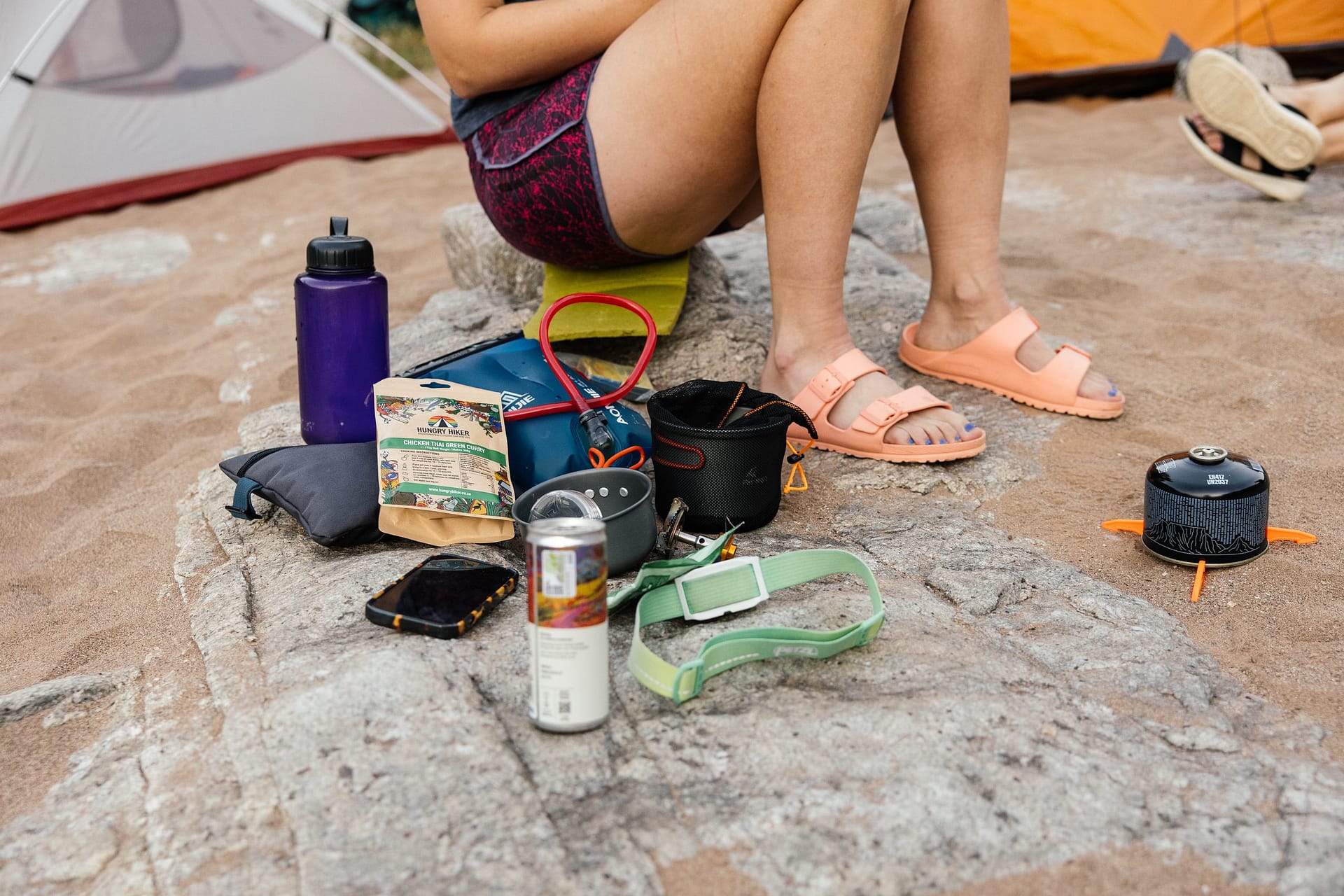
Pair your homemade trail beef with your favourite Hungry Hiker meal for a complete adventure food kit. A warm, satisfying meal at the end of the day, with a little homemade protein snack to keep you going along the way.
A Little Taste of Home on the Trail
There’s something wonderfully South African about taking dried beef into the mountains.
The coriander, vinegar and spices give this recipe a familiar boerewors-and-biltong-inspired flavour, while the thin, dehydrated pieces make it particularly practical for hiking.
It’s simple food, made at home, using ingredients you can find at your local butcher and grocery store — and it belongs just as much in a backpack as it does in the kitchen.
Make a batch before your next adventure and see how quickly it disappears.
🥾 Hungry Hiker Trail Tip
Don’t wait until the night before your hike.
Make a batch on the weekend, portion it into trail-sized servings and keep it ready for your next adventure.
Then, when the hiking plans come together, your trail snacks are already sorted.
Grab your pack. Grab your trail beef. And go.
Food Safety & Storage
Work with fresh, cold meat and keep the mixture refrigerated during preparation and overnight marination. Make sure your hands, equipment and work surfaces are clean, and dry the beef thoroughly.
Homemade dried meat can vary in moisture content depending on the thickness of the pieces, drying temperature and drying time. It should not automatically be assumed to be shelf-stable.
For longer-term storage, keep your dried beef refrigerated and use it promptly. For multi-day trips or warm conditions, take appropriate precautions to keep the product cool and protected from moisture.