
Dehydrated vs Freeze-Dried Food: What’s the Difference and Which Is Best for Hiking?
Two ways to make food lighter and shelf-stable. Two very different processes. But which one belongs in your backpack?
If you’ve ever stood in an outdoor shop comparing hiking meals, you’ve probably noticed that some are dehydrated while others are freeze-dried.
At first glance, they might seem like much the same thing. Both remove water from food, making lightweight meals for hiking and camping practical to carry on the trail.
But the way they remove that water is very different — and those differences can affect weight, texture, rehydration time, cost and the overall eating experience.
So, is dehydrated food better than freeze-dried food?
Or is freeze-dried food the obvious choice?
The truth is a little more interesting.
Neither method is automatically better.
The better choice depends on what you want from your food — and what kind of adventure you’re taking it on.
First things first: why remove the water?
Water makes up a large part of the weight of fresh food.
Remove most of that water and you are left with something much lighter, smaller and easier to store.
That’s incredibly useful when you’re carrying everything you need for several days on your back.
Drying also reduces the amount of available water in food, making it much less hospitable to the microorganisms responsible for spoilage. Properly dried food can therefore be stored without refrigeration when packaged and handled appropriately.
Fresh food → remove water → lightweight, shelf-stable food.
The interesting part is how you remove that water.
What is dehydrated food?
Dehydration is a relatively straightforward process.
Food is exposed to controlled heat and moving air, which gradually removes moisture. It’s one of the oldest methods of preserving food and is still widely used today.
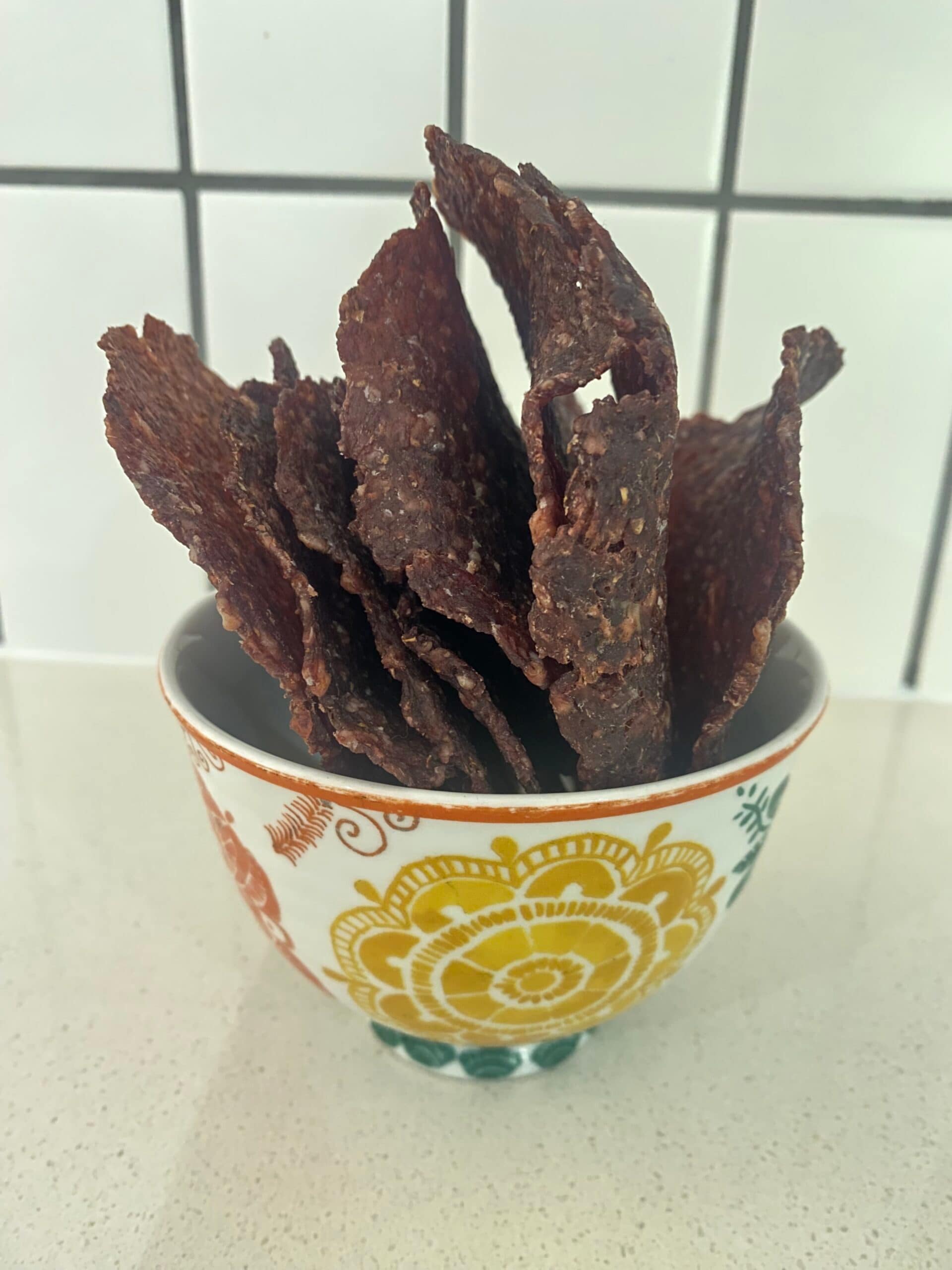
Think dried fruit, biltong, jerky and dried vegetables.
But dehydration isn’t limited to individual ingredients.
You can also cook a complete meal and then dehydrate it.
And that’s particularly useful for hiking food.
A curry, stew, pasta sauce or casserole can be prepared as a meal, cooked, seasoned and then dehydrated.
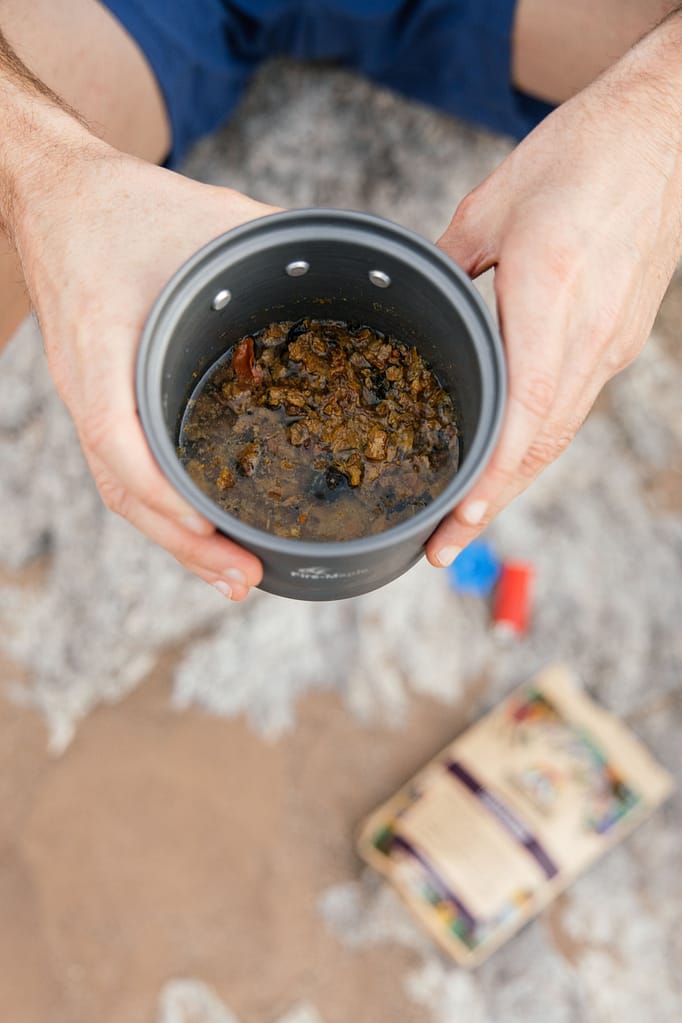
When you add water later, you’re not simply rehydrating a collection of dried ingredients.
You’re bringing a cooked meal back to life.
What is freeze-dried food?
Freeze-drying is a considerably more complex process.
Food is first frozen. It’s then placed into a vacuum, where the frozen water is removed through a process called sublimation — essentially allowing ice to change directly from a solid into water vapour without first becoming liquid.
The result is a very lightweight food with a porous structure.
That porous structure is one of the reasons freeze-dried foods can absorb water so quickly.
Freeze-drying is also particularly effective at retaining the original shape and structure of many foods, as well as much of their flavour and nutritional characteristics.
It is an impressive bit of food technology.
And there are adventures where those characteristics are exactly what you want.
Dehydrated vs freeze-dried: the quick comparison
| Dehydrated | Freeze-Dried | |
|---|---|---|
| Weight | Very lightweight | Extremely lightweight |
| Texture | Dense & hearty | Light & porous |
| Preparation | Longer hydration & cooking | Very fast rehydration |
| Flavour | Excellent for cooked meals | Excellent preservation of ingredients |
| Process | Heat & airflow | Freezing & vacuum |
| Cost | Often more affordable | Generally more expensive |
Which is lighter: dehydrated or freeze-dried?
If your only goal is to carry the absolute minimum possible weight, freeze-dried food generally has the advantage.
Freeze-drying can remove a very high proportion of the water from food while maintaining a porous structure, resulting in exceptionally lightweight products.
And when you’re doing something like a long-distance expedition, a multi-week trek or an unsupported trail, those grams can add up.
But there’s another way to look at it.
If your dehydrated dinner weighs a little more but gives you a substantial, satisfying meal at the end of the day, are those extra grams really a problem?
For many weekend hikers and multi-day trekkers, probably not.
You’re carrying dinner.
You’re just not carrying all the water that goes with it.
Which rehydrates faster?
Because freeze-drying produces a porous structure, water can penetrate the food quickly.
Many freeze-dried meals are designed around a simple:
Add hot water → wait a few minutes → eat.
Dehydrated meals generally take longer because the food structure is denser.
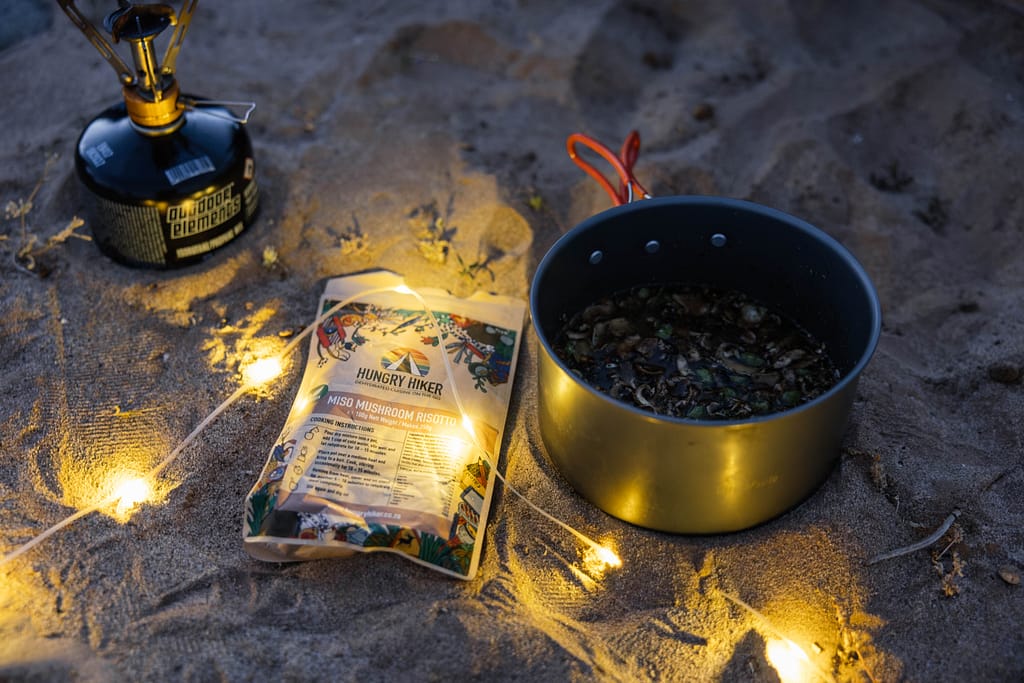
At Hungry Hiker, our meals are designed around a soak-and-cook method rather than simply adding water and waiting. Our preparation process allows the meal time to hydrate before cooking, helping bring the ingredients back together into a satisfying meal.
That takes longer than a typical freeze-dried meal.
We don’t see that as a flaw.
We see it as part of making the kind of meal we want to eat.
Does freeze-dried food taste better?
You’ll find plenty of freeze-dried brands making strong claims about taste, and freeze-drying certainly has advantages when it comes to preserving the original structure and characteristics of ingredients.
But the drying method isn’t the only thing determining how a meal tastes.
What happens before the food enters the dryer matters enormously.
Consider a curry.
The flavour doesn’t magically appear because the food was freeze-dried.
It comes from the ingredients, the spices, the cooking process, the balance of seasoning and the time those ingredients spend cooking together.
The same applies to a slow-cooked meat sauce or a casserole.
Was the food simply dried, or was a proper meal made first?
At Hungry Hiker, we start with the meal.
Then we remove the water.
What happens to the texture?
This is one of the biggest practical differences between the two processes.
Freeze-drying generally preserves the structure of individual ingredients remarkably well. The resulting food is light and porous.
Dehydration tends to produce a denser product. Ingredients can shrink and become more concentrated as moisture is removed.
Again, neither is necessarily better.
It depends on what you’re making.
For individual ingredients — think fruit, vegetables or pieces of meat — preserving their original structure can be very useful.
For a cooked sauce, curry, stew or casserole, however, we’re not necessarily trying to preserve the original appearance of every individual ingredient.
We’re trying to make a delicious meal.
And that’s where dehydration works particularly well for Hungry Hiker.
Is dehydrated food less nutritious?
This is a common misconception.
Dehydration does not simply remove all the nutritional value from food.
Calories, protein, fibre and minerals remain in the food, while water is removed. However, some heat-sensitive vitamins can be reduced during drying, with the extent depending on the food and processing conditions.
Freeze-drying generally has an advantage when maximum preservation of heat-sensitive nutrients and the original characteristics of food is the priority, because the process uses very low temperatures.
But that doesn’t mean dehydrated food is automatically unhealthy.
The ingredients still matter.
A dehydrated meal made from real meat, vegetables, rice, pasta, spices and other whole-food ingredients is still made from those ingredients.
The water has been removed.
The food hasn’t disappeared.
Why does freeze-dried food usually cost more?
Freeze-drying is a technically sophisticated process.
It requires specialised equipment to freeze the food and then create the vacuum conditions necessary for sublimation.
That adds complexity, time and equipment costs.
Dehydration is a much simpler process, which is one reason dehydrated food can often offer a more accessible price point.
And when you’re buying food for a five-, seven- or ten-day hike, the difference can become significant.
So again, it comes down to priorities:
Maximum weight and speed? Freeze-dried may be worth the premium.
A hearty meal at a more accessible price? Dehydrated can make a lot of sense.
Why Hungry Hiker chooses dehydration
We didn’t choose dehydration because we think freeze-drying is bad.
Quite the opposite.
Freeze-drying is brilliant.
It solves a very specific problem extremely well: how do you make food incredibly light, quick to prepare, and easy to carry?
But that’s not the only problem we’re trying to solve.
How do we make a lightweight trail meal that you actually look forward to eating?
At Hungry Hiker, we believe food should still feel like food when you’re standing at the end of a long trail.
We make real, cooked meals designed specifically for the outdoors.
Our meals are dehydrated, lightweight and compact, but they’re also designed around flavour, texture and satisfaction.
Because after a day on the trail, dinner isn’t just fuel.
Dinner is part of the adventure.

Dehydrated or freeze-dried: which one should you choose?
There’s no universal winner.
And that’s actually the point.
Freeze-dried food is an excellent choice when minimum weight and maximum speed are your priorities.
Dehydrated food is an excellent choice when you want lightweight convenience without giving up the experience of eating a properly cooked meal.
So before choosing your next hiking meal, don’t just ask:
“Which one weighs less?”
Ask:
“What do I want to eat when I get to camp?”
If the answer is something quick, light and ready in minutes, freeze-dried might be exactly what you’re looking for.
If the answer is something hearty, flavourful and satisfying that feels like proper dinner…
Frequently Asked Questions
Is dehydrated food the same as freeze-dried food?
No. Both methods remove water from food, but they use very different processes. Dehydration uses controlled heat and airflow, while freeze-drying freezes food and removes the ice under vacuum through sublimation.
Is freeze-dried food lighter than dehydrated food?
Generally, yes. Freeze-drying can remove a very high proportion of the food’s water and produces an exceptionally lightweight product.
Does freeze-dried food rehydrate faster?
Generally, yes. Its porous structure allows water to penetrate the food quickly, making it particularly well suited to meals that need to be ready within minutes.
Is dehydrated food good for hiking?
Absolutely. Removing water makes food lighter, more compact and easier to carry, making dehydration particularly useful for hiking, camping and backpacking.
Is dehydrated food healthy?
Dehydrated food can absolutely form part of a healthy diet. The nutritional quality depends on the ingredients used and the overall recipe. Some heat-sensitive vitamins can be reduced during dehydration, but protein, calories, fibre and minerals remain.
Which tastes better: dehydrated or freeze-dried?
There’s no universal answer. The drying method is only one factor. The ingredients, recipe and cooking process have a huge influence on the final meal. At Hungry Hiker, we focus on creating cooked meals where flavour is developed before dehydration.
How long do Hungry Hiker meals take to prepare?
Our meals are designed around a soak-and-cook preparation method. Follow the preparation instructions on the individual meal packet for the recommended soaking and cooking times.
Is dehydrated food good for backpacking?
Yes. Removing water makes food substantially lighter and reduces its volume, making dehydrated meals particularly useful for hiking, backpacking, and camping.
A final thought
There is a tendency to think that outdoor food should be about efficiency above everything else.
Lightest.
Fastest.
Smallest.
And those things matter.
But so does sitting outside after a long day, watching the sun disappear behind the mountains, and eating something that tastes genuinely good.
You don’t hike all day just to eat for two minutes.
You hike all day for the experience.
And we think dinner should be part of it.